
Reading time: 4 minutes
3-Sentence Book Summary
- Scott Young teaches you about how you can save your tuitions and learn in a self directed manner.
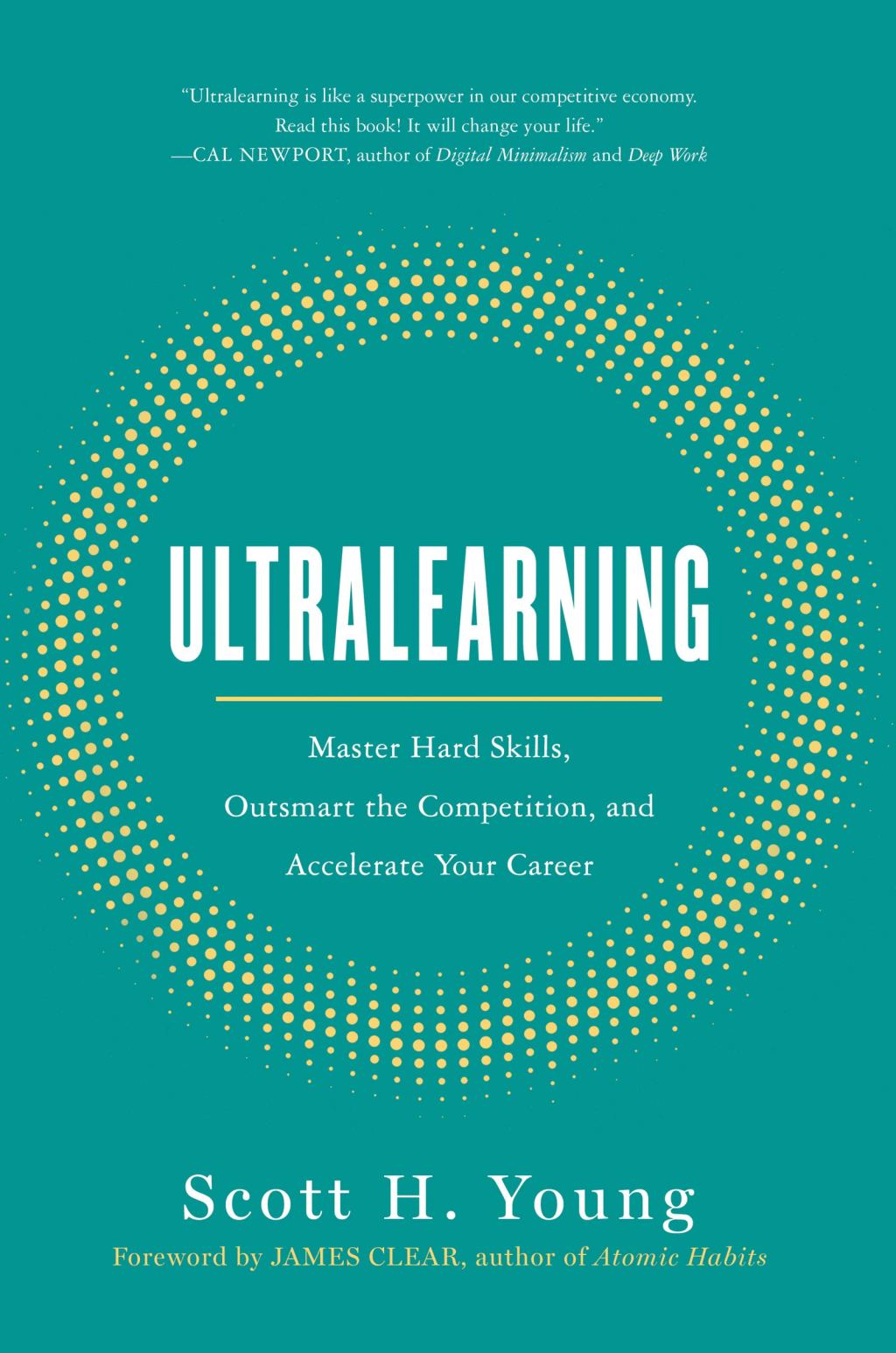
Ultralearning is a strategy for aggressive, self-directed learning. It’s a strategy—meaning a choice about how to pursue learning to get results. It’s aggressive—meaning aimed at doing what works, even if it’s a little harder or intense. It’s self-directed—meaning you’re the one in control
Scott H Young
Who should read it?
- Anyone who wants to increase learning skills to acquire skills and knowledge faster in a competitive field/industry
- If you want to save tuition and learn at your own pace.
Benefits of Self Learning
- Fill in classes you didn’t take in college.
- Time-efficient, but it can be cognitively demanding
- Self-designed and tailored.
- You can apply those skills in your free time. Even a bit will make a difference.
1. Meta-learning: figuring how to learn a subject or skill
- Why do you want to learn it?
- Your method will be different from a professional or for a hobby.
- Being proficient in Spanish is different.
- What do you want to achieve?
- Conceptual, procedural, or facts-based?
- How are you going to learn?
- Look at blog posts and experience sharing videos for this.
- Talk to people who are in the direction you want already.
- Information balance. Not too much info. Sweet spot.
- Rule 10 percent: 10% of your time should be done for research.
2. Practice Focusing
- Meditation for focusing and perception of time
- Good state of high and calm arousal for work
- Set the timer for 5 minutes and get into learning
- Poor optimizations
- Humans want instant rewards. So, of course, watching youtube videos is more satisfying than reading a book.
- Have good task difficulty
- Complex cognitive tasks require a quiet undistracted, or calm music environment. Great attention but relaxed arousal.
- Be present with your negative thoughts and emotions.
3 . Directness (aka applying knowledge into projects)
- We do not like to apply skills. You have to use the skill of direct practice for learning it.
- The world is not like the classroom. A classroom has everything controlled like a lab.
- Learn from projects
- Immersing yourself in the environment of learning
- Simulation of a real-life scenario.
- High standard and overachievement
- Publicly sharing your work.
4. Drilling your weaknesses
- Project use, practice weakness, and project
- Identify your weaknesses in one skill.
- Increase deeper learning with mindfulness. Work through frustration.
- You can add the skills back into the bigger picture once you have improved.
- For example, in filmmaking, mine will be the technical aspects of the camera. And screenwriting to make the story and content flow and plot the information I need.
- I’m pretty good with ideation, post-production, and good music.
- Not that good with music and sound design, but it is better than the technical camera things like IOS, shutter speed, aperture
- How to improve your weakness, though?
- How to find your weakness?
- How to create a productive drill?
- How to build an organic story?
- Don’t have so many choices; I want concise and clarity. It happens in my academic writing and Youtubing too.
5. Retrieval
- Desirable difficulty
- Use visual cue association.
- Or write down as much as you can after learning.
- I need to retrieve things I learn from books and videos for screenwriting and how and when to apply them directly.
6. Feedback
- You want feedback for correction.
- Take overreaction with a grain of thought. Most feedback is not helpful.
- Outcome feedback is graded in the school setting.
- Informational feedback
- Corrective feedback. A gap between what you are doing and where you want to be. This should be from an authority.
- This is why hiring a tutor for a skill is useful. You save time from finding what’s right.
7. Retention
- Fight the forgetting curve and practice.
- Overlearning is to practice a lot.
- Practice the task until you can do the homework or skill multiple times
- Challenge yourself, so it is burned into your brain.
8. Deeper knowledge and intuition
- Desired difficulty
- Aim to prove what you are for
- Make sure you actually understand what you are studying. Don’t feel good about learning.
- Prioritize concrete examples. We need it for understanding abstract things like physics. Make your own examples.
9. Experimentation
- Creativity then remix
- Try different materials
- Introduction of learning
- Have simple goal
- List resources. Learning criteria, so you don’t replicate other people’s
- Avoid pitfalls
- Textbooks, videos, and books
- Practice activities to input the skill
- Create your schedule
- How much commitment and time you are putting?
- Live stream yourself?
- I will do this in the future XD. And I can chat with people.
- Act on your plan and see how you did
- Don’t mindlessly just do everything.
- Do it intentionally
- Review your results
- Reflect and adjust your future plans
- Create a plan for Long Term Retention
- Integrate into your daily lives?
 Priscilla Xu
Leave a comment