
Is choosing where to live or whom to marry the most important life decision? A harsh tug of war. Today, we will discuss one of the — Where to live?
I am graduating soon. I wanted to run thought experiments on where to live.
The Anatomy and Process of Making a Decision
I recently found this intriguing book called Judgment in Management Decision Making by Max Bazerman.
Choosing where to live has many things to consider, such as cultural differences, job opportunities, social life, the pace of living at the location, climate, learning a new language or not, etc.
1. Define the decision/problem
- How can I rank all the factors that determine the quality of life on where I will be living.
2. Identifying the criteria
- The criteria of the decision to be a good decision will be having a subjective high quality of life. I will need to rank the factors based on which one I value more and how I will be affected
3. Weight the criteria
- Deciding where to live is a personal decision rather than a business decision, but the book was initially made for managerial decisions.
- Making a scoring system of the factors that influence the quality of life might be a good idea for weighing the criteria.
4. Generate alternatives
- This step is quite simple. Alternatives include other locations that I can imagine myself living at.
5. Understand the consequences
Deciding where to live will determine many effects. They include what people I will meet or get married to, the child’s education, and career opportunities.
6. Clarify your uncertainties
- The uncertainties in deciding where to live are enormous because visiting the city is very different from traveling the city.
7. Consider related linked decisions.
Some other related decisions will include where I want to get licensed as a psychologist or dentist.
The next step is to research to gather information to make an accurate decision. However, more details about the decision do not mean that the decision will be more accurate. The trap is not to find too much information by knowing what matters to the decision by listing the criteria and uncertainties I want to research.
No matter how many stories I hear, they will not be the reality.
Of course, I will be watching vlogs and asking people who have lived in the city I want to live in.
The sample size of the research has to be big enough, so the statement about the city is generally correct. The argument arises from the law of large numbers in statistics and finance, which states that.
The law of large numbers states that an observed sample average from a large sample will be close to the actual population average and that it will get closer the more prominent the sample.
Investopedia
The point here is not to go out and collect 100 stories. But to not be pigeonhole myself with one or two stories that I like the most and fall into the confirmation bias, where I only search for facts that agrees with my beliefs.
This statement arises from the concept Map is Not the Territory in the olden days. The earth is round, and a map is flat, so the map can never represent the actual shape of the planet. The map is fundamentally distorted. I think of maps as theories and the natural world applying the ideas. However, with Google maps, I doubt if this statement is accurate.
The world is very multidisciplinary. I live in one city or change my career if and only if I love one part of it. So, for example, I cannot move to Spain if I like traveling Europe; I cannot opt out of dental school just because of a petrified breakup.
Velocity vs. Speed
Imagine that you are a pilot flying from JF Kennedy in NYC flying to Los Angeles, California. You are 1ª off the course, then end up in the middle of the Pacific Ocean.
One degree of change in your life direction can lead to wasting all of your efforts.
Velocity and speed can explain this better.
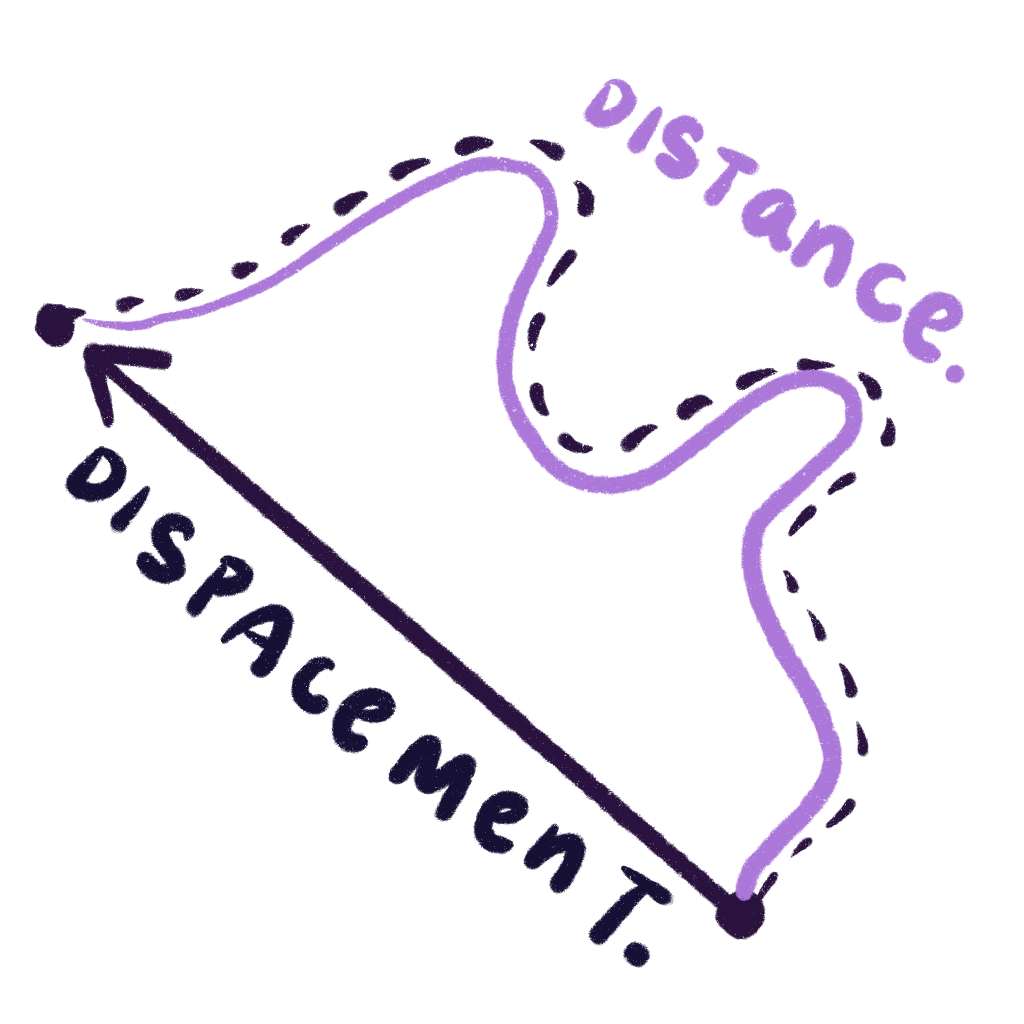
In physics, speed is the rate of moving along a certain distance. So the formula for speed is the distance over time.
In contrast, velocity adds another dimension to speed: direction. Velocity is is the speed and direction of the object’s movement. The formula for velocity is a change of displacement over the difference in time.

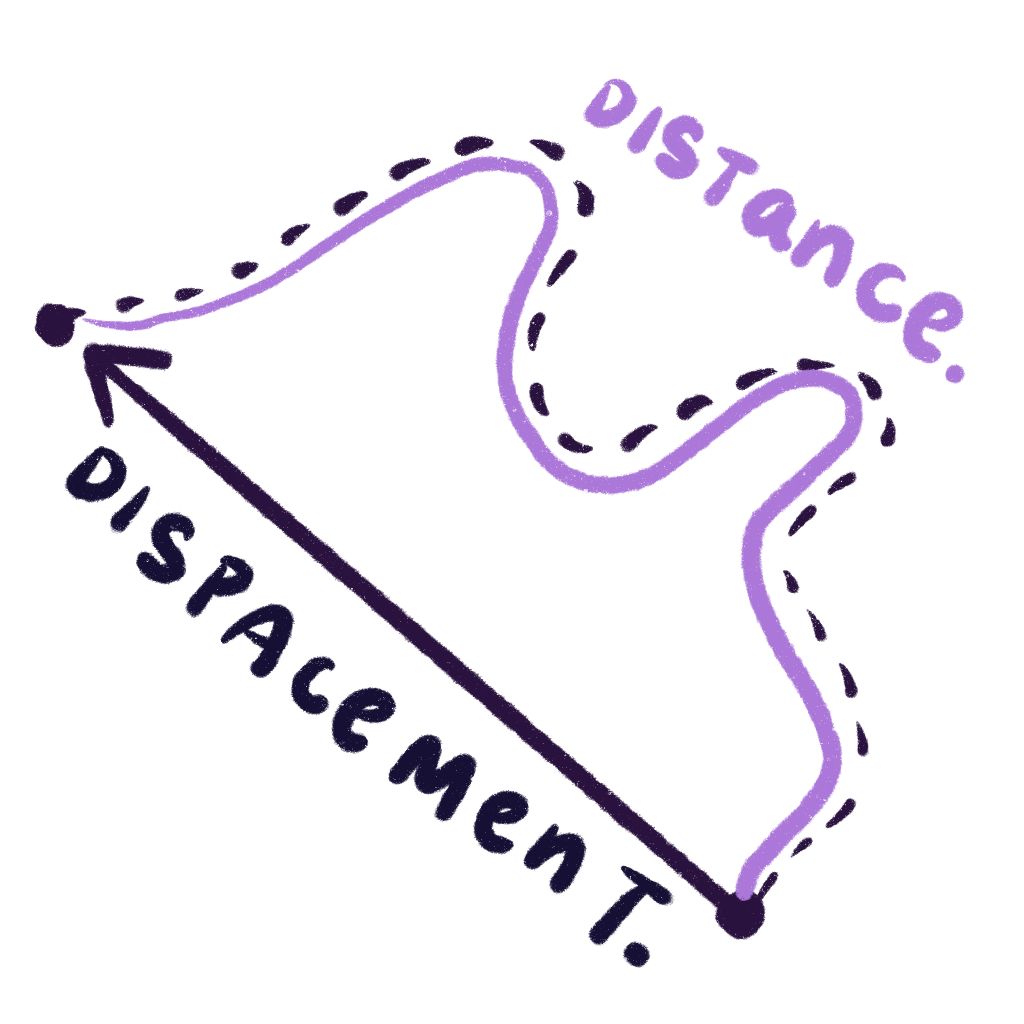
Oh. Here’s a reminder of what displacement is. Let’s say we are driving from location A to B. There are a squiggly river and mountain range, so the road is not straight. The road will be the distance traveled. And the displacement is the shortest distance from point A to B regardless of the natural obstacles.
The conclusion from velocity and speed applied to decision-making is that strategies are more important in guiding the direction I want to go. I will need to say no to many possibilities that distract me off the path.
- For example, many vlogger YouTubers move to New York or Los Angelos.
- Thinking about the speed mental model, I will be chasing this new trend.
- Velocity mental model thinking will allow me to think in long-term direction and strategies.
- In the end, where do you/I really want to live? (not chasing the lastest hot location)
If I focus on speed, I fall into the trap of business instead of being mindfully productive. In this research paper, humans ironically do less practical tasks than sit there doing nothing.
The mental model applies to decide where to live because I want to be making sure I am making a sustainable change towards the idealized life.
Success doesn’t happen overnight. It takes a combination of skills and requires you to work smart in a specific direction.
As long as you are heading in the right direction and reflecting on your mistakes, there is nothing else to worry.
How I used a Pros and Cons List.
This is a Pros and Cons list with a twist. The decision-making tool is from a book called Get Smarter: Life and Business Lessons.

- List the pros of the things about imagining myself living in one place.
- List the cons on the other side of the T-chart.
- Score the pro list items from 0-10. 0 means that this factor is not essential. Ten means that this factor is significant to me.
- Score the cons list items from 0-10 0 means that this is not a drawback. Ten means that it is a significant drawback.
- If the pro list score is double the cons side at minimum, do the thing. Yes, regardless of whatever it is, according to the book.
I wrote the pros and cons of living in each city then added the scores. This method forces you to tear your emotions and look at what points matter.
I hope you find it helpful to make good decisions for yourself too.
 Priscilla Xu
Leave a comment