
Do you find yourself having to relearn the basics of something from high school when you are studying something more complex in college?
There is a solution to the problem. And it might be simpler than you think.
Problems With Old taking Methods
When we take notes, we ask the question, “which subject do these lecture notes fall into?”. The problem is that knowledge exists in isolation. However, the real world is multidisciplinary and operates with interlinked systems. After university, you and I will be chucked into the adult world to face this, so we better prepare ourselves to think about how the world runs.
Let’s take a step back. Humans naturally tend to group similar ideas together in a complex and diverse world. The central core idea that is extracted from the group is called concepts.
To slow down the speed of learning new things, we will stick with the basic concepts.
What are concepts?
The first sentence in Wikipedia says
Concepts are abstract ideas.
Let’s start with a daily life example to make the definition of concept less abstract.
Imagine a brown stick with a green circle on top of it. What do you think?
Take a look at this picture. You will find what a concept is.
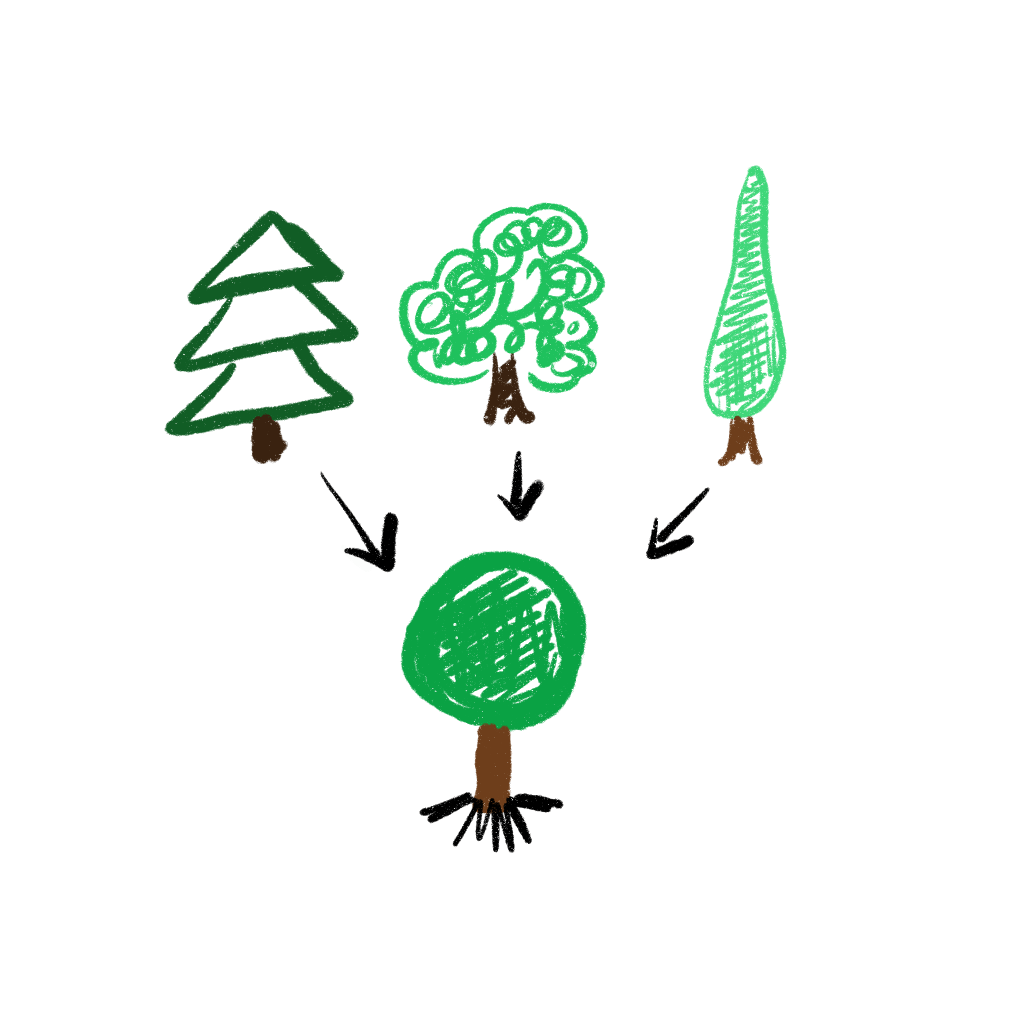
A tree.
Frameworks
Learning basic concepts will allow you to solve problems faster by mixing and matching them. Here are two mental models that will help ease the progress of conceptual learning.
Human knowledge to not exist in isolation.
I love the feeling of not being forced to hold on to any knowledge after a final exam. The brain will most likely forget the information because the information is not connected to other memories.
The brain is the most energy-consuming organ of the body. So, the brain is a highly minimalistic person; it will sweep out anything that it does not need.
Suppose that we want to retain the knowledge from biology and build a strong foundation for learning physiology, immunology, ecology, and microbiology later on. In that case, we have to combat the brain from forgetting basic things.
In the old system, the question is: Under which topic do I store this note? In the new system, the question is: In which context will I want to stumble upon it again? How to take intelligent notes
Our goal is to extract the most valuable ideas and apply them to the complex world.
We do not want our knowledge to be built on the topic of toothpicks.
First Principle Thinking
When you think about the first principles, you will ask yourself, “What is the most fundamental truth? And How can I apply that truth?
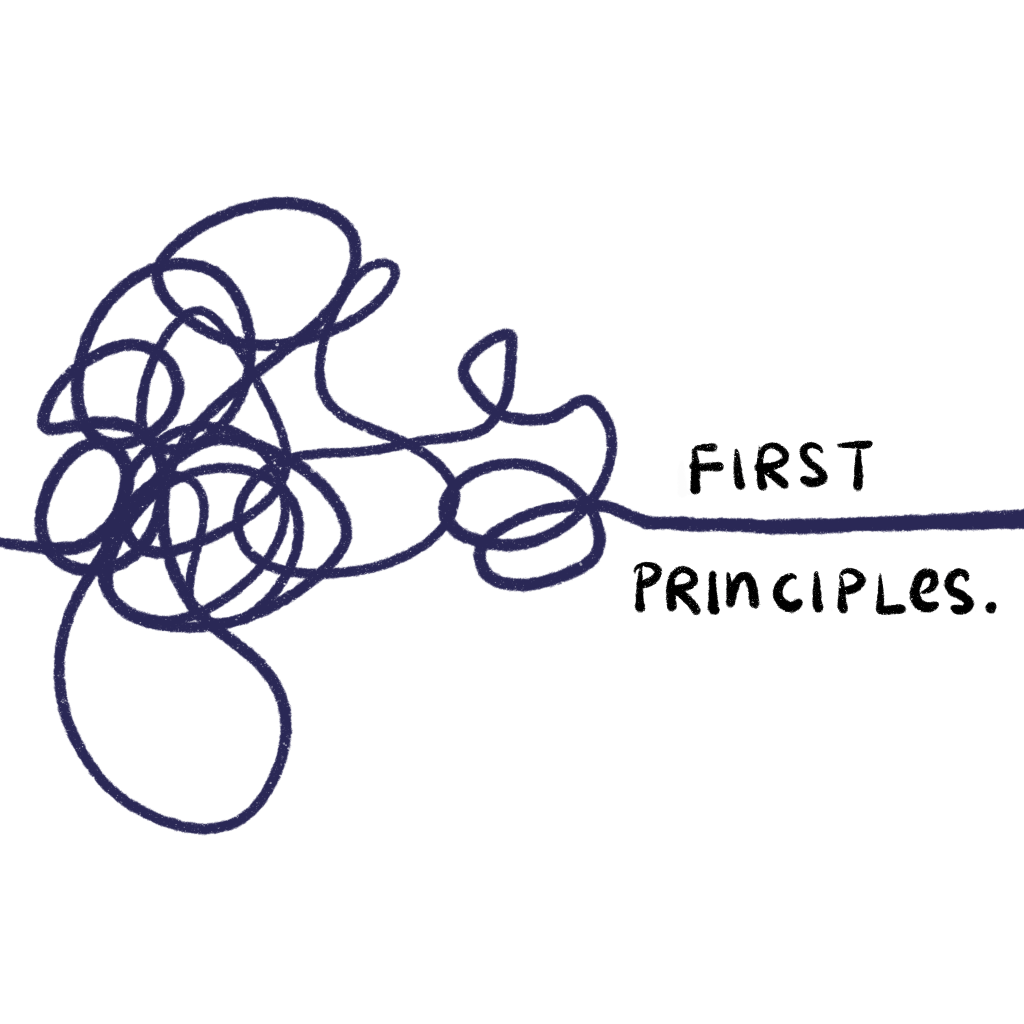
For example, if I build a house in an icy region. I will understand the science of materials, such as steel, cement, concrete, glass, to make the home functional and efficient with an exceptional climate.
If I do not use the first principles, I will focus on the design. First, I will compare previous plans in similar climates; then adopt what is used to the current scenario.
Using first principles, I can think of a design from the benefits of each material and build things other people have not thought of. In addition, the cost of producing the plan will be decreased because I focused on what material to use rather than hiring an expert to do that analysis.
Example of Conceptual Learning
To put all the concepts into the playing field, I will pick only one concept and apply it to 4 seemingly unrelated subjects.
Last year, I had social psychology, behavior analysis, principles of management, and advertisement.
To clear up some definition of subjects,
- Social psychology is how the context of a situation influences your thoughts, behaviors, and emotions.
- Behavior analysis is understanding why we behave the way we do and applying it to clinical psychology.
- Business management means coordinating people and resources in a goal-oriented fashion.
- Advertisement is the promotion of a product or service.
Those academic definitions just make me want to go to sleep.
When I skim through the definition of the subjects, I can only find one connection between social psychology and behavior analysis. Yet, they are all required classes in my psychology lecture.
The following three steps will supercharge your learning to build your foundation of knowledge.
1. Collecting from lectures
During a particular week, I had a lecture on attitudes in social psychology.
- Attitudes are how you think and feel about something.
The section of the attitudes chapter, it describes how attitudes are formed. Some key concepts are classical and operant conditioning. They are the basic concepts in psychology.
- Classical conditioning is shaping behavior by making associations.
- Operant conditioning is shaping behavior by reward and punishment.
2. Processing Notes by Connecting
The purpose of processing notes is to make connections with concepts. After class, I will discover new relationships after allowing the information from the attitude lecture to cook on the simmer. Here they are.
- Operant conditioning and classical conditioning also appeared in the behavioral analysis and advertisement class.
- In behavior analysis, external cues conditions our thinking habits and fixed behavioral patterns. It makes us unconscious do or think in the loop because there is a particular reward from the cycle. However, sometimes, the habits and behaviors can be mentally unhealthy.
- An example would view social media as a signal of the need for validation and comparison, triggering negative body image self-talk. (Find a study for this).
- In the advertisement, pairing a colorful poster will prime you to develop a positive attitude for a brand or product and influence you more likely to buy it.
- Many of our everyday behaviors are shaped by the invisible hand of self-interested using psychological principles.
- In management class, the professor discussed the components of attitudes and how attitudes are formed in managing individual differences and work-related behaviors. Employees’ attitudes towards a specific project will impact their behavior when working on it.
I use bidirectional linking note-taking software for connecting keywords and concepts. I use RemNote mainly because they have a very good flash cards system.
In RemNote, The key terms in the app will be a hyperlink (the blue text), and I can click on it to access other connections.
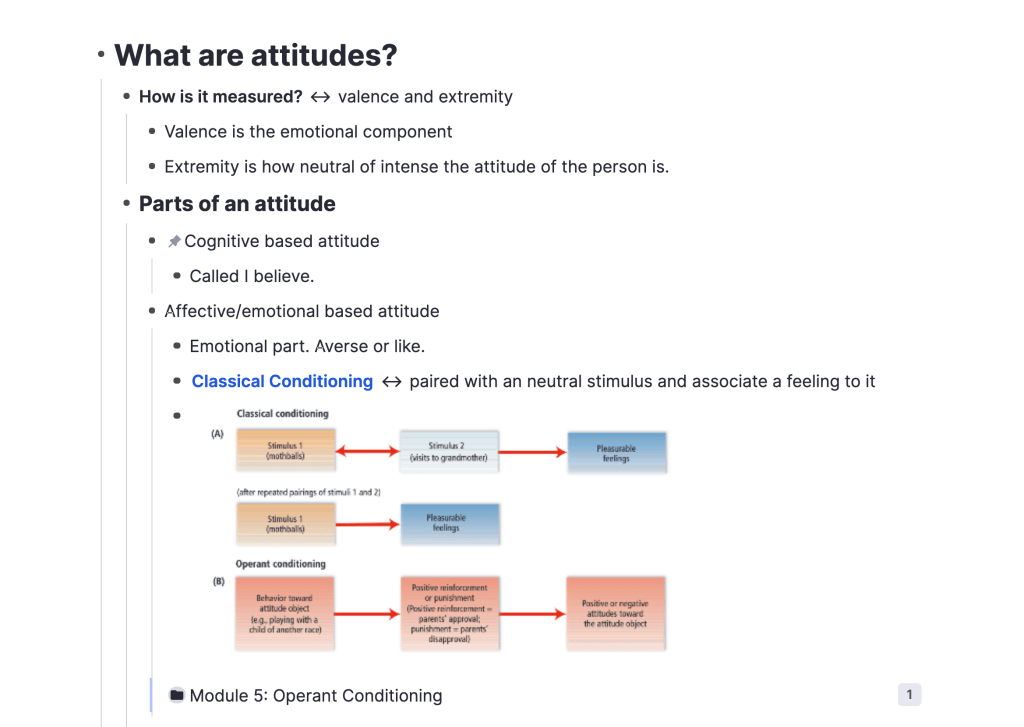
Sometimes the connections come like a light bulb, and it clicks in my mind.
Side note: My favorite bidirectional linking app is Roam Research and Logseq.
3. Review with a Mindmap Brain Dump
What’s a “Mindmap Brain Dump”?
A mindmap brain dump is when you draw a mindmap without looking at your notes. The key with this method is to review the connections you have made during your notes process. This is a very effective review technique for checking your references.
I use my iPad for this.
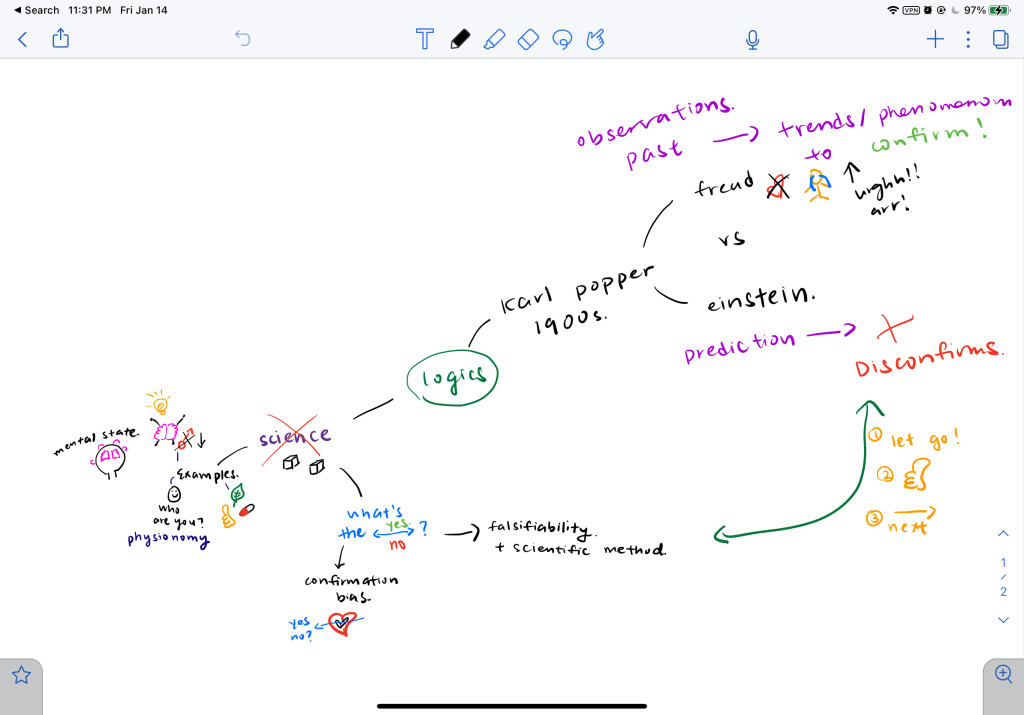
After a day from the lecture, I will not touch the lecture material to forget some of the connections and knowledge that I have learned.
I will brain dump on a mindmap at the end of the week.
There are countless ways to do a mindmap. But how do you do a good mind map that helps with memory consolidation?
The research compared visual mapping using mind mapping and concept mapping techniques with question-answer session built-in discussions. The average exam score for visual mapping was significantly higher than the control group.
The fundamental principles of making a good mind map are. You can memorize with the acronym GRIDDS24.
- Group: the content will be grouped by commonalities or analogies to condense the amount of information you learn
- Reflection: the mindmap is a tool to visualize your thinking
- Interlinked: The concepts have to be linked together. There are no orphan concepts.
- Directionality: The purpose of directionality is to show the flow of information. We can color code the arrows when we define the directions and connections. This will allow you to be creative and play with your knowledge.
- A causes B
- A contrasts B but is similar to C
- A is associated with C.
- Drawing: Use arrows and simple graphics to represent complex ideas.
- Short and Simple: Be very intentional when choosing key terms to write down. We want to keep it short, sweet, and straightforward.
- 24: the branches from one central concept should not be more than 4 because the human’s working memory can only handle 7 groups of information at once.
Mindsets and Actionable Tips to Ease Your Journey into Conceptual Thinking
1. Don’t be an information hoarder.
Trust me, you will start as an information hoarder and then work your way to not become one.
I was so fascinated by personal knowledge management and conceptual learning at first. Still, I realized that I collected a lot of information that I did not revisit. So then, I learned how to curate what I needed from the noise. This is the method to survive in a content-heavy and information overload society.
Welcome to the attention economy, baby!
2. Adjusting to conceptual, relational, and first principle thinking will take around a month.
Think of them as developing new habits. Since habit takes on average 21 days to form, you will have to be patient with yourself.
We will have to be kind to ourselves and increase our awareness to catch ourselves before falling into the same thought patterns.
From my experience, what helped the most with developing awareness and habits are practicing mindfulness meditation and metacognition.
3. Your note structure will emerge over time.
Note structure will be very fluid since we had adopted the mindset that knowledge does not exist in isolation. The learning process is very messy. Embrace the mess and trust your curiosity.
4. You will find connections you never did before.
When you are in the diffused mode of thinking, the mind will wander outside the box. However, the reason will consolidate the other connections you have made in previous sessions. Research has shown that the memory consolidation phase can happen for weeks and months, or even years after the learning.
Nikolas Luhmann said a similar thing in the book, How to Take Smart Notes
“I only do what is easy. I only write when I immediately know how to do it. If I falter for a moment, I put the matter aside and do something else”.
Niklas Luhmann
When you return for the next session to study, the new version of you will find new connections.
You will figure out what you do not need to memorize.
Suppose you have made a substantial, foundational knowledge structure. In that case, you will identify the last tiny details that you need to memorize for your test.
- For example, I am studying biochemistry. I have grouped and connected the chemical reaction processes such as the Krebs, Cycle, glycolysis, gluconeogenesis, fatty acid metabolism electron transport chain.
- After the framework is established, I will only need to memorize the outliers that are not logically aligned to the framework. Those might include the chemical structures or technical terms of enzyme names because the forward and reverse of the same reaction use different enzymes.
Conceptual note-taking will decrease the amount of boring flashcard flipping sessions before a test. I made an entire video explaining this process of reducing the content I need to memorize.
Start your knowledge playground.
I am excited to see your practice and build your very own knowledge playground too. Once you have practiced conceptual note-taking, you can even try to publish your notes to create in public.

 Priscilla Xu
Leave a reply to How to Increase Your Brainpower: Cognitive Load Theory – Priscilla Xu Cancel reply