
Have you been told to be mindful? But what does mindfulness mean in a psychological context? First, mindfulness has a precise usage in psychology.
I have been living clumsily for the past 22 years. Yet, until the first midlife crisis, I have the chance to learn mindfulness in psychological therapy contexts.
Training your mind to be mindful is like training a muscle. The best analogy of training is going to the gym, but a mental gym.
To understand mindfulness better, we will tackle what mindfulness is not and debunk a few myths about it.
What is the relationship between mindfulness and meditation?
Mindfulness is a method of meditation in science. Mindfulness meditation has a standard of training in the manual to be effective as a psychological treatment.
The definition of meditation is very vague. The purpose is to alter the mental and spiritual state of consciousness.
When people think of meditation, they can be seen as breathwork, yoga, and taichi. And yes, those all are considered as a type of meditation.
Different methods of practicing meditation have various effects. The effects contain relaxation or connection to the religion.
Psychologist Jon Kabat Jin paraphrases the definition.
Mindfulness is defined as cultivating a non-judgemental intention to observe the perceptions that come and go in your mind in the psychology world.
Mindfulness can be used in body scans, listening working out, walking, listening, eating, observing your thoughts and emotions.
A simple analogy can show the difference between being mindful and not mindful.

Is mindfulness a religion?
Mindfulness originated from Buddhism, but it is now a separate branch from Buddhism and is verified by mainstream science.
In 1978, MIT psychologist John Kabat Jin introduced mindfulness to the western world. Since Jon Kabat Jin used mindfulness in psychology in 1978, the method has detached from its Buddhist origin. The intention of mindfulness is not religious anymore.
In 2010, the national health institute invested millions of dollars in scientific research development of mindfulness treatment in psychology.
In 2018 December, the Annual Review of Clinical Psychology concluded that mindfulness effectively treats significant depression, anxiety disorder, addiction, post-traumatic stress disorder, and attention hyperactivity disorder.
Yes, mindfulness is a psychological treatment that has been developed very recently.
Can Mindfulness Change the Brain?
Yes, many research articles have established this theory.
The brain’s characteristic of learning and changing is neuroplasticity—the exact detail of how the brain changes are still unknown. When you use the active circuits more, the part becomes stronger.
In a literature review from British Columbia, 20 studies established that eight brain areas are different from people who do not meditate.
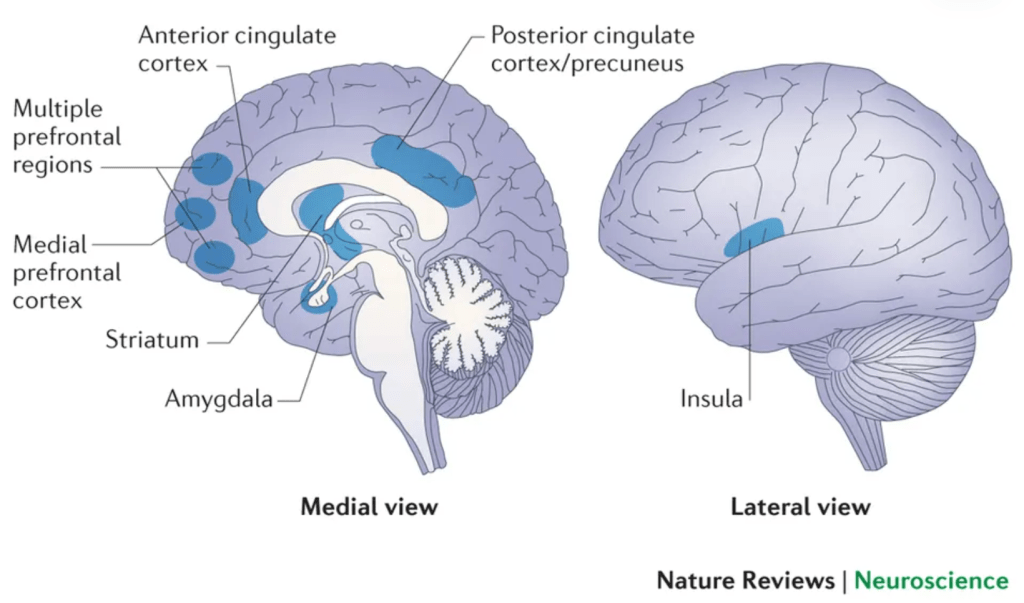
The most significant difference is the anterior cingulate cortex, where the brain control impulses, actions and sustains attention.
Studies show that mindfulness meditators have decreased activity in the insula, where the brain perceives pain. So, this means that your perception of emotional or physical pain decreases.
In a longitudinal study with two months of focused monitoring attention, the participants can switch faster “between mind wandering and focused attention and maintaining attention once inattentive state.”
Is mindfulness’s purpose relaxation?
You will feel relaxed when you practice meditation, but this is not the primary purpose.
The primary purpose of mindfulness is awareness and observation of the body using an open-minded and accepting attitude to embrace the everyday experience. Therefore, it does not matter if your bodily response to experience is happy, relaxed, anxious, angry, or sad.
Ironically, using mindfulness to learn how to manage emotions and stress will increase the awareness of pain and sadness. When practicing mindfulness meditation, we will observe our sensations, feelings, and thoughts. We will try our best to release the critical inner voice and allow the natural experiences to come and go as it likes.
Running away from our emotions and problems is not shameful, but it will not help us solve them. We will have to accept and coexist with stress and pain. We began to view negative emotions as a normal part of life and not suppress them.
We can develop open-mindedness and bring attention back into reality by practicing mindfulness meditation. We will pause and accept the situation and not make decisions that worsen the emotions. We can look into the possibilities in the future and recognize the resources we might have ignored.
Can mindfulness hypnotize you?
Mindfulness can improve your sleep quality, but it cannot hypnotize you.
One of the earliest signs of emotional distress is decreased sleep quality.
For example, I will fall into emotional distress when I think of my past romantic relationship. Therefore, I will purposely stay up late and finish work because my harsh voice will tell me that I must complete my work to be loved.
After practicing mindfulness meditation for three months, I still make a conscious decision to stay up late. With the most potent emotional trigger like past romantic relationships, personally, my inner child will develop a very rebellious, unconditional love response. I am describing it as “unconditional,” which means that I have to stick to my schedule and finish my work to feel worthy of being loved because I produce value to the world and learn something for myself.
Will Mindfulness make me lazy?
Mindfulness will not make you lazy or lose your motivation, but it can help you decrease the times you are bothered by your emotions. As a result, you will gain wisdom on the journey.
This misconception stems from the mindset of embracing the power of now.
The power of now is not carpe diem (seizing the day) or following a lie-flat movement. Instead, we have to accept the current situations; then, we can make wise decisions for the future.
Here is an example on a rainy day that shows the difference between acceptance and judgments.

- It’s raining outside. Yes, it is raining, and I have noticed that.
- It’s raining outside. I hate raining. I wish there were no rain. Raining makes my day so inconvenient.
When we are mindful, we can use our prefrontal cortex to decide to react or not a reaction to the emotions and thoughts in the brain.
Do I have to be focused 24/7 to be mindful?
Mindfulness can increase your ability to focus, but mindfulness’s purpose is to be aware and observant.
We might be sad when distracted by our emotions during mindfulness meditation. However, when you watch that you are distracted, you are already back to the present.
Mindfulness practice will develop our ability to be present, but this does not mean that we must be 100 % focused and distracted.
When you practice more with mindfulness, you will bring your attention back to the present faster. Your ability to monitor your engagement and get back your concentration will be increased.
Attention and mindfulness are like a muscle. The more you train it, the stronger it becomes.
Will practicing mindfulness get rid of my emotions?
Mindfulness practice develops your acceptance of emotions but does not delete the feeling.
Emotions are a part of life. After years of practicing mindfulness, any human will still have happy and sad emotions. However, we will name the emotion when it arises and leaves.
We will stop being resistant to the emotions and be set free. Before, I will be kidnapped by emotions. Now, I can swim with my feelings and take selfies with them.
Is mindfulness studying theories where you can learn when you read?
No, we cannot learn mindfulness through reading books.
Imagine that you are trying to learn how to swim. You cannot understand. You have to get into the pool to learn.
Mindfulness is experienced through practice. Therefore, the only method to develop mindfulness is to share it.
Is there a minimum amount of time to practice mindfulness?
You can start with practicing 10 minutes a day. The most important thing is the consistency of practice—mindfulness practice help with decreasing stress, emotional regulation, and focusing on the present.
Remember neuroplasticity? Our brains will form new circuits of novel thinking habits and emotional reactions through practice.
Whenever we choose to practice again, we will change the brain.
If you want to feel the benefits of mindfulness, 10 minutes is a good start to change.
Final Words
I understand that mindfulness meditation is very tedious and seems like a waste of time. However, once you get started, you will feel the benefits of mindfulness meditation compounding.
So, I request you with all my heart, please do not just read and leave this article, take action, and make science improve your quality of life.


 Priscilla Xu
Leave a reply to The Neuroscience of Emotions – Priscilla Xu Cancel reply